Mediation Attendance Update
Mediation Attendance Update
On January 23, 2023, The Supreme Court of North Carolina adopted the Rules for Mediated Settlement Conferences and Other Settlement Procedures in Superior Court Civil Actions, superseding the existing set of rules in its entirety, that went into effect on May 1, 2023. Rule 4, which governs attendance at Superior Court mediations, was amended.
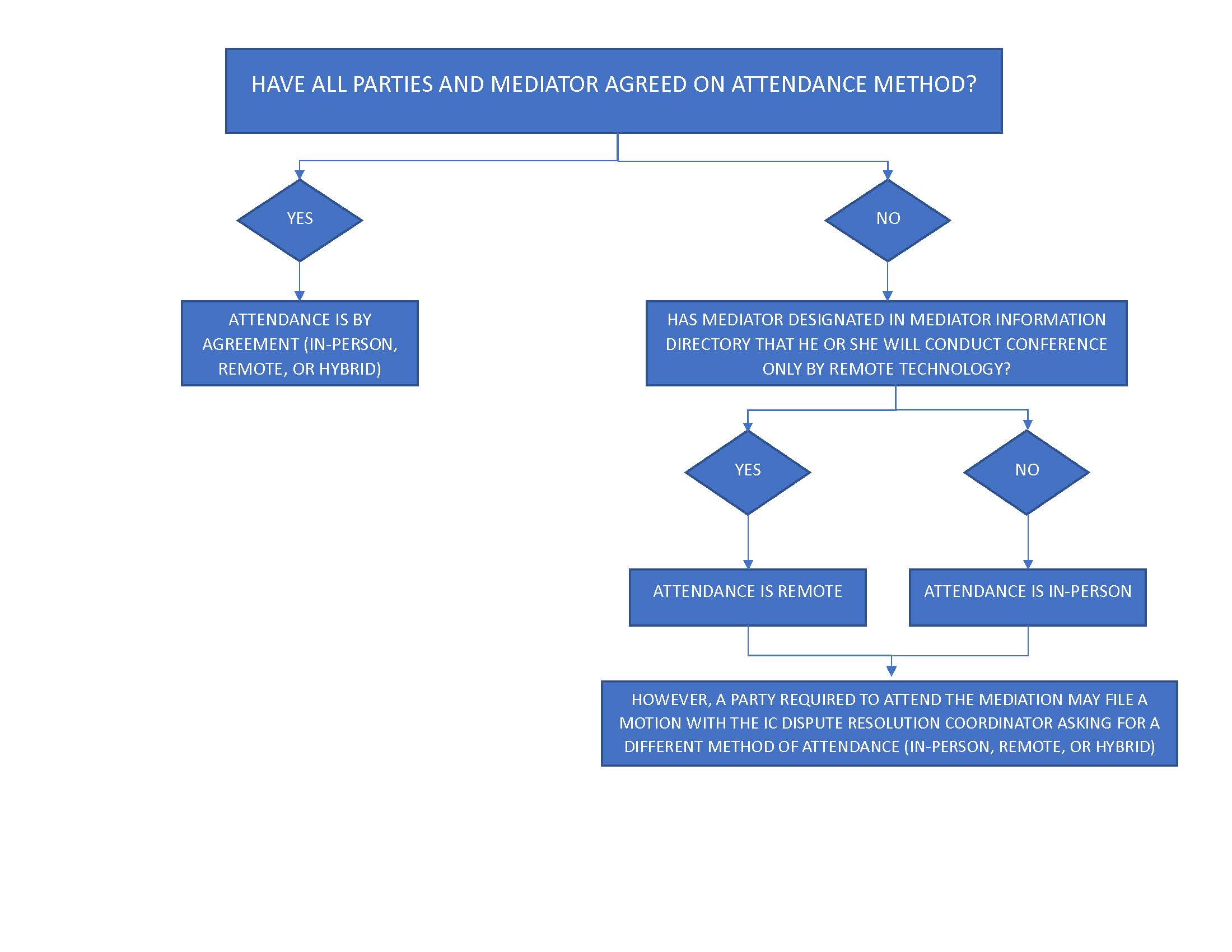
Rule 4 was amended to state that if all parties and the mediator agree that the mediation will occur remotely, in-person, or a mixture of the two, then the mediation will be held using the agreed-upon attendance method. If the parties cannot reach an agreement regarding the attendance method of the mediation, the mediation will automatically occur in person. However, the mediation will not automatically occur in person if the mediator has stated in the Dispute Resolution Commission’s Mediator Information Directory that they will only conduct remote mediations.
If a party that is required to attend the mediation would like an attendance method that was not agreed by the parties and the mediator, then that party may file a motion with the Industrial Commission Dispute Resolution Coordinator asking that a different method of attendance be ordered.
Rule 104 of the Industrial Commission’s mediation rules (11 NCAC 23G .0104) concerns mediation attendance and paragraph (b) specifies that the attendance method for Industrial Commission mediations shall be the same as the attendance method set forth in Rule 4 of the Rules for Mediated Settlement Conferences and Other Settlement Procedures in Superior Court Civil Actions. Accordingly, the Rule 4 amendments directly affect the way that the Industrial Commission determines mediation attendance methods. To help understand this concept, the Industrial Commission created the following flowchart.
Although some mediations are quite successful when held remotely; others seem to be more successful if all the parties are physically present. Sometimes when the mediation is held remotely, the participation of the parties is less predictable as the individual’s focus may be on other things, which hampers progress during the mediation. Further, in workers’ compensation cases, mediation is normally the only time the defense counsel is in the presence of the injured worker and it much harder to judge his or her credibility if the case were to go to a hearing; or to get an impression of how “injured” the individual actually is if the parties are appearing remotely. This is especially true in denied cases where credibility and disability status are often in dispute. If you have any questions or would like to discuss the best method of attendance at your mediations, please reach out to a member of our Workers’ Compensation team.