
Blazing the Trail: Women Who Shaped the Law in North Carolina
Every March, Women’s History Month invites us to pause and reflect on the courage, persistence, and brilliance of women who pushed through barriers, often alone, often without recognition, to change institutions for the better. In the legal profession, that story is especially powerful. Here in North Carolina, it is a story worth telling.
From a woman who petitioned the state’s highest court just to be allowed to take the bar exam, to a jurist who was considered for the United States Supreme Court, North Carolina’s legal history is filled with trailblazers who made the profession and the justice system more just. At our firm, which has spent decades defending companies, employers, and local governments across the state, we are proud to work within a judicial system shaped in part by the extraordinary women who helped build it.
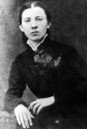
Tabitha Ann Holton: North Carolina’s First Female Lawyer
In 1878, before women could vote, before female lawyers were accepted in most American courtrooms, Tabitha Ann Holton appeared before the Supreme Court of North Carolina to sit for the state bar examination. Through her counsel, she stated her case and argued that the bar admission statute simply stated, “all persons who may apply for admission.” Holton took the stand and answered all questions thrown her way with sophistication, illustrating her clear understanding of the law. At the close of her case, the Court deliberated for ten minutes before ruling that she should be granted acceptance to the North Carolina bar.
It was reported that she passed the examination as well, if not better, than any of the male applicants. Today, Tabitha’s law license remains part of the Supreme Court’s collection of historic artifacts. Holton’s act of quiet defiance, simply asking to be considered, cracked open a door that generations of North Carolina women would walk through after her.
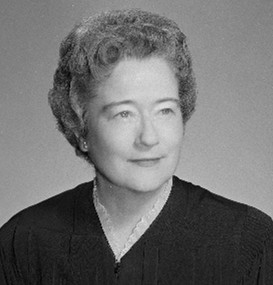
Susie Marshall Sharp: A Pioneer on Every Bench She Sat
Sharp entered the University of North Carolina School of Law in 1926 as the only woman in her class. She passed the bar exam in 1928 and graduated Order of the Coif, among the highest academic honors in law school. In 1949, Governor Kerr Scott appointed her to the Superior Court, making her the first female judge in the history of North Carolina. In 1962, Governor Terry Sanford appointed her to the state Supreme Court, where she became its first female associate justice. And in 1974, North Carolina voters gave her 74 percent of the vote to elect her Chief Justice, making her the first woman in the United States to be popularly elected to lead a state’s highest court.
During her 17-year tenure on the Supreme Court, Sharp authored 459 majority opinions, 124 concurring opinions, and 45 dissents. Senator Sam Ervin recommended her to President Nixon for the U.S. Supreme Court, a recommendation Nixon declined. The nation would wait until 1981 for its first female Supreme Court justice. North Carolina had already shown the way.
Time magazine named Sharp one of its twelve “Women of the Year” in 1975, calling her a trailblazer with a reputation as both a compassionate jurist and an incisive legal scholar. When she died in 1996, the Greensboro Daily News wrote that she was “an unlikely heroine. But she was one of the best North Carolina has ever had.”
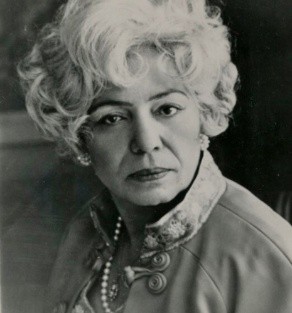
Judge Elreta Melton Alexander-Ralston: A Symbol of Justice in Every Sense
Elreta Melton Alexander-Ralston’s life and career serve as a groundbreaking symbol of firsts that resonates with the legal community today and throughout history. In 1968, Elreta Melton Alexander-Ralston became the first Black woman elected to a district court bench anywhere in the United States. Her campaign slogan said it all: “The Symbol of Justice Is a Woman. Elect a Living Symbol of Justice.”
Elreta had already broken barriers just to enter the profession. A graduate of Columbia Law School’s Class of 1945, the first Black woman to earn that distinction, she returned to Greensboro and became the first Black woman to practice law in North Carolina and the first to argue before the state Supreme Court. She faced a legal system that had been designed, in many ways, to exclude people who looked like her. She took on cases defending people of color when the system and the odds were stacked against them, treating every case as a civil rights case. She sued the city of Greensboro on behalf of Black residents barred from using a public golf course; she lost the suit, but the pressure forced the city to open a new course, and wrote its charter. She defended four young Black men in what was at the time the longest criminal trial in Guilford County history and used the proceedings to shine a light on sentencing disparities and bias in jury selection, ultimately changing the county’s jury selection procedures. She co-founded one of the first racially integrated law firms in the southern United States.
Elreta was reelected to the bench in 1972, 1976, and 1980. Her mentees described her as absolutely brilliant, passionate, visionary, savvy, courageous, kind, and possessed of the most comprehensive knowledge of the law, plus street sense. What made Elreta Melton Alexander-Ralston truly extraordinary wasn’t the number of firsts attached to her name, it is the understanding that justice is not a destination you arrive at, but a character you maintain every single day. She modeled that for a profession, and for a state, that is still learning from her example.
Where We Stand Today
The progress these women seeded has grown significantly. Today, five women have served as Chief Justice of the North Carolina Supreme Court. Women make up more than 40 percent of all elected judicial positions in the state. Law schools across North Carolina and the nation now enroll more women than men.
North Carolina Court of Appeals Chief Judge Donna Stroud, herself the third woman to lead that court, put it simply: the glass ceiling, if not shattered, has at least been cracked. She serves on the Women in the Profession Committee of the NC Bar Association, focused on training and mentoring the next generation.
At Teague Campbell, we work every day within a civil justice system shaped and strengthened by women like Tabitha Holton, Susie Sharp, and Elreta Alexander, along with many others who followed in their path. When we walk into a courtroom, we do so in a legal tradition they helped build.
At the close of Women’s History Month, we celebrate their legacy and renew our commitment to a profession that is worthy of it.